
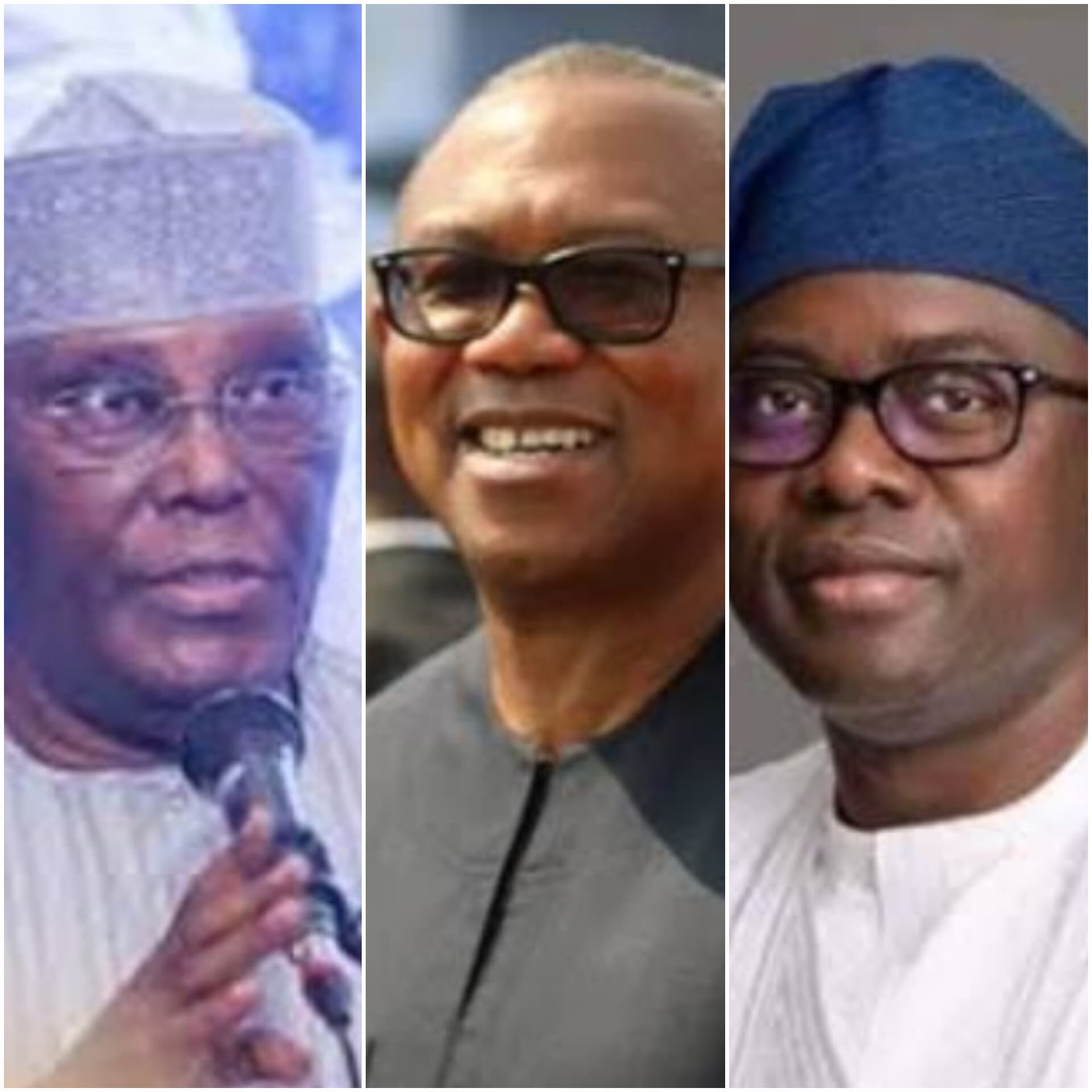
Plans by opposition groups to produce a single presidential candidate for the 2027 election are facing fresh uncertainty as major contenders, including Atiku Abubakar, Peter Obi and Seyi Makinde, remain committed to their individual presidential bids. The development comes despite the G-100 Alliance’s efforts to unite opposition parties and candidates behind one flag bearer before […]
Plans by opposition groups to produce a single presidential candidate for the 2027 election are facing fresh uncertainty as major contenders, including Atiku Abubakar, Peter Obi and Seyi Makinde, remain committed to their individual presidential bids.
The development comes despite the G-100 Alliance’s efforts to unite opposition parties and candidates behind one flag bearer before September 30.
The coalition recently held a summit at the Shehu Musa Yar’Adua Centre in Abuja, bringing together representatives of six opposition parties as part of efforts to develop a common strategy ahead of the 2027 general elections.
The G-100 says its ultimate objective is to select a consensus presidential candidate who can secure the support of other opposition parties and mount a formidable challenge to the APC and President Bola Tinubu.
Ambassador Umanu Elijah, a member of the coalition, said the process was still at an early stage but expressed optimism that an agreement would be reached before the end of September. He explained that consultations were continuing privately among the various political actors.
Elijah also pointed to a recent meeting between Obi and Makinde as an indication that opposition leaders were already engaging across party lines. He said such consultations formed part of the broader process being driven by the G-100.
However, the major presidential contenders have so far given no indication that they are ready to abandon their ambitions. An ally of Atiku said the former Vice-President remained open to discussions but was determined to contest the 2027 election on the ADC platform.
The ally argued that Atiku had long advocated an opposition alliance and that the process had already resulted in the emergence of the ADC as the platform adopted by several opposition leaders. He maintained that Atiku’s candidacy should attract the support of other politicians who believe he has the capacity to defeat the ruling party.
Makinde’s position was equally unequivocal. Abubakar Yusuf, the APM National Publicity Secretary, said the Oyo State governor entered the presidential race with the intention of winning and had not withdrawn for any aspirant. He added that Makinde could still become the consensus candidate if the ongoing talks eventually favoured him.
For Obi, the NDC said it was prepared to discuss the possibility of a single opposition candidate but would not diminish the strength of its own candidate. The party’s National Publicity Secretary, Osa Director, described Obi as a popular and credible contender with a strong chance of becoming the eventual consensus choice.
Not every opposition party, however, supports the idea. Sowore of the African Action Congress argued that a single candidate would mean little without a shared political ideology and concrete plan to transform Nigeria. He said his party was seeking fundamental reforms rather than simply replacing the APC with another group of politicians.
Sowore listed economic justice, decent wages, quality education, healthcare, reliable electricity, affordable housing, security and accountable governance among the priorities of his movement. He consequently rejected the possibility of stepping down simply because other opposition politicians agreed on a consensus candidate.
The Democratic Leadership Alliance also rejected the proposal, while the Action Democratic Party maintained that its candidate would not withdraw. ADP Chairman Yabbagi Sani argued that competing interests, policies and manifestos would make it difficult for several parties to reach a workable arrangement within a short period.
Meanwhile, YPP presidential candidate Peter Agada offered a more conditional position, saying he could consider a consensus arrangement if it was anchored on ideology, a clear development framework and a plan to move political power closer to the grassroots.
With several candidates still holding firmly to their presidential ambitions, the G-100 faces the difficult task of persuading the competing camps to sacrifice individual interests for a common platform before its September 30 deadline.