
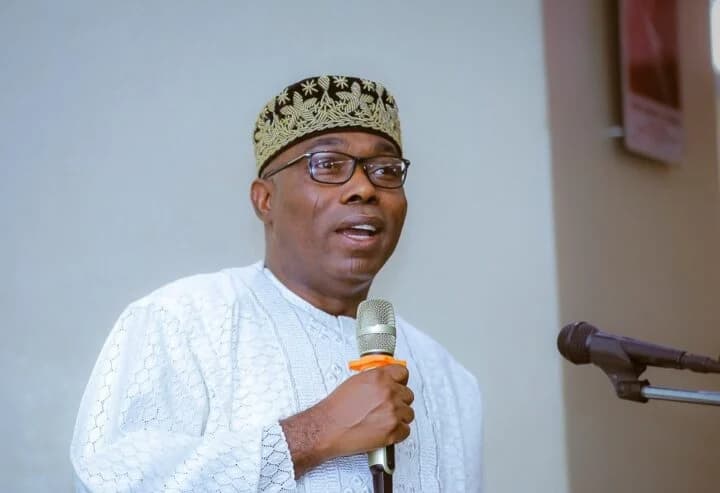
Adewole Adebayo, the presidential candidate of the Social Democratic Party, has cautioned Nigerians against returning President Bola Tinubu to office in 2027, warning that another four years under the current administration could have devastating consequences for the country. Adebayo gave the warning while responding to questions from Nigerians during an interactive session on X, where […]
Adewole Adebayo, the presidential candidate of the Social Democratic Party, has cautioned Nigerians against returning President Bola Tinubu to office in 2027, warning that another four years under the current administration could have devastating consequences for the country.
Adebayo gave the warning while responding to questions from Nigerians during an interactive session on X, where he spoke about leadership, insecurity, economic hardship and the responsibility of voters to make informed decisions. He argued that Nigeria’s difficulties are not impossible to overcome but require leaders with the experience and ability to confront them.
According to him, Nigeria’s biggest problem is not necessarily the scale of its challenges but the inability of those in leadership to accept responsibility and provide practical solutions. He urged citizens to approach the country’s current situation with determination rather than frustration, stressing that difficult periods are part of the development of every nation.
The SDP candidate compared Nigeria’s experience with the struggles of other countries, particularly Kenya and South Africa, where freedom fighters endured killings and brutal repression during their battles against colonialism and apartheid. He explained that the comparison was not intended to diminish the sacrifices of Nigerian nationalists but to show that the country’s historical challenges were different.
Adebayo identified several areas where he believes Nigeria requires urgent improvement, including the justice system, policing, national security, education, healthcare and infrastructure. He questioned why a country with Nigeria’s geographical structure still struggles to provide adequate bridges and maintain major roads, arguing that these are problems competent engineering and planning should address.
He also expressed concern that Nigeria had fallen short of the vision of its founding fathers, who hoped the country would become a leading force for Africa and the black race. He criticised the celebration of what he considered basic political gestures, including the appearance of a president’s photograph on a bag of rice, saying such developments fall short of the ambitions held at independence.
Addressing his comparison between voting for the APC and drinking poison, Adebayo explained that the consequences of a poor electoral decision could extend to people who did not support the winning government. He cited kidnappings, killings by criminal groups and the displacement of communities as examples of how insecurity affects entire populations, making electoral decisions a collective responsibility.
He urged Nigerians to reject ignorance, political apathy and intolerance, insisting that citizens must educate themselves about available political alternatives. He also used the biblical account of the Wall of Jericho to illustrate how leaders often make ambitious promises before taking office but later complain that the problems they encounter are too difficult to solve.
Adebayo recalled previous economic policies, including the austerity measures introduced under the Shagari administration in 1982 and the Structural Adjustment Programme under Ibrahim Babangida, saying Nigerians had repeatedly been asked to endure hardship while waiting for promised improvements. He argued that the Tinubu administration had followed a similar pattern after promising that fuel subsidy removal would fund better electricity, jobs and improved living conditions.
With the current administration approaching the end of its first four-year term, Adebayo said Nigerians were still waiting for the transformation they had been promised. He maintained that leaders should demonstrate their understanding of the country’s problems and present workable solutions instead of repeatedly asking citizens for more time.