
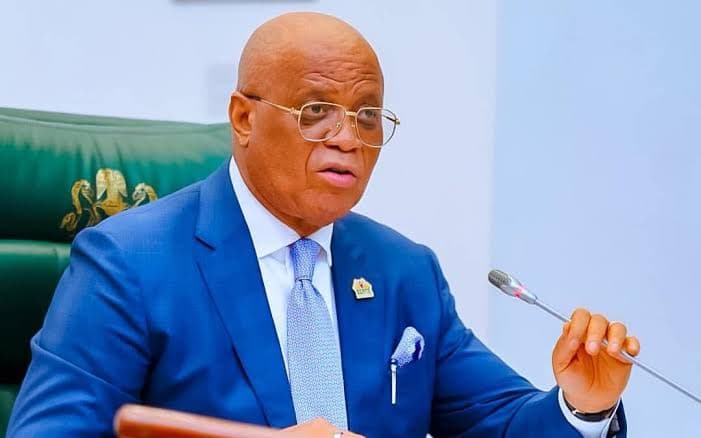
Akwa Ibom State Governor Umo Eno has recounted how a business he started with akara and bread grew into a venture that earned him no less than ₦10 million monthly before he entered politics. The governor made the revelation during the state’s monthly covenant prayer service on Tuesday, with the disclosure attracting attention online the […]
Akwa Ibom State Governor Umo Eno has recounted how a business he started with akara and bread grew into a venture that earned him no less than ₦10 million monthly before he entered politics.
The governor made the revelation during the state’s monthly covenant prayer service on Tuesday, with the disclosure attracting attention online the following day.
Eno said his business journey began with selling akara and bread, which he packaged and marketed as “Akara Burger.” The concept involved placing the akara inside bread for customers, particularly workers heading to ExxonMobil in the morning.
As patronage increased, the governor said he expanded the operation by establishing a coffee shop where customers could purchase drinks alongside the akara and bread. He noted that the business premises still exists.
According to Eno, the akara business became a substantial source of income, generating at least ₦10 million each month. He presented the experience as part of the entrepreneurial foundation he developed before becoming involved in politics.
The governor’s account highlights his experience with starting a business from a simple food venture and gradually expanding it to serve a wider customer base. He said the journey taught him valuable lessons about entrepreneurship and growing businesses from small beginnings.
His comments have also revived attention around a recent debate over the viability of petty businesses as a means of improving household income in Nigeria.
The debate intensified in June after First Lady Oluremi Tinubu encouraged Nigerians to explore ventures such as akara, roasted corn and kuli-kuli, saying they could be started with relatively little capital.
The First Lady’s remarks attracted criticism from some Nigerians on social media, with critics questioning the relevance of such businesses to citizens struggling with rising economic pressures. She later explained that the empowerment programme was broader, covering traders involved in businesses such as tomatoes, roasted plantain, pepper and vegetables.
She also disclosed a ₦100 million intervention for 2,000 petty traders in Jigawa State, with each beneficiary set to receive ₦50,000 to strengthen their businesses.
President Bola Tinubu subsequently added humour to the discussion when he referred to his wife as “Iya Alakara” during a Presidential Press Corps Dinner.
With Eno now sharing his own experience, his revelation has added a personal dimension to the debate over small businesses, demonstrating that a venture as modest as akara and bread can, under the right circumstances, grow into a major source of income.