
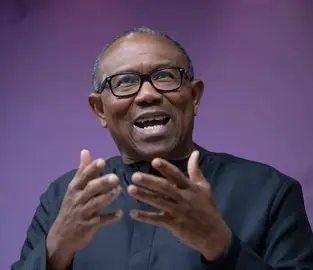
Former Anambra State Governor Peter Obi has again denied leaving the state with outstanding debt, saying he did not obtain loans or issue bonds from financial institutions during his eight-year tenure. Obi made the statement while appearing on Arise TV’s Prime Time, where he responded to renewed allegations by the Anambra State Government about loans […]
Former Anambra State Governor Peter Obi has again denied leaving the state with outstanding debt, saying he did not obtain loans or issue bonds from financial institutions during his eight-year tenure.
Obi made the statement while appearing on Arise TV’s Prime Time, where he responded to renewed allegations by the Anambra State Government about loans and liabilities associated with his administration.
The NDC presidential candidate said that by the time he handed over power in March 2014, the state had no outstanding salaries, gratuities or pensions that were due from the government.
He similarly stated that contractors and suppliers who had completed their jobs and passed the required certification and verification processes were not left unpaid.
Obi said some of the funding now being described as loans from his administration involved multilateral development support facilitated through government programmes.
He explained that Anambra, Ekiti and Bauchi had been selected for concessionary support because of their performance in education.
According to him, the World Bank-backed funding was not money he personally went to a commercial bank to obtain, adding that the relevant drawdown under the State Education Programme Investment Project happened after his tenure.
The former governor also questioned the practice of treating an entire approved facility as debt incurred when only part of the facility had actually been accessed.
Using a hypothetical N10bn facility as an example, Obi said a government that drew only N500m could not properly be described as owing the entire N10bn merely because the larger facility had been approved.
He also referred to Abraham Nwankwo, former Director-General of the Debt Management Office, claiming that Nwankwo publicly stated during his retirement ceremony that Obi was the only governor who never visited his office to obtain approval to borrow.
However, the Anambra State Government has presented a different account of the state’s financial obligations.
The government said eight external borrowings contracted during Obi’s administration remained outstanding, with the balance estimated at about N127.4bn as of June 30, 2026.
The state said the original external borrowing connected to those facilities was about $123.77m and that approximately $92.35m remained unpaid by June 30, 2026.
The projects identified by the state included malaria control, Fadama development, healthcare, education, erosion control, community development and agricultural value-chain initiatives.
The Soludo administration has also questioned Obi’s claims concerning unpaid salaries, pensions, gratuities and funds allegedly left in an ecological account.
Obi, however, has continued to maintain that he left Anambra in a strong financial position and without unpaid obligations of the nature being alleged.
The former governor has previously challenged those making the allegations to provide evidence, saying he would abandon his presidential ambition if it was established that he left the state with unpaid debt or certified contractor obligations.
The disagreement has intensified as political activity ahead of the 2027 presidential election increases, with Obi’s supporters accusing Soludo of focusing excessively on the former governor.
The OK Movement has urged Soludo to concentrate on governing Anambra and allow voters to assess the records of previous administrations themselves.
The central issue remains a dispute over how the external facilities should be classified and attributed, with Obi maintaining that he did not personally borrow or draw the funds in question while the Anambra Government says outstanding obligations from facilities contracted during his tenure remain on the state’s books.