
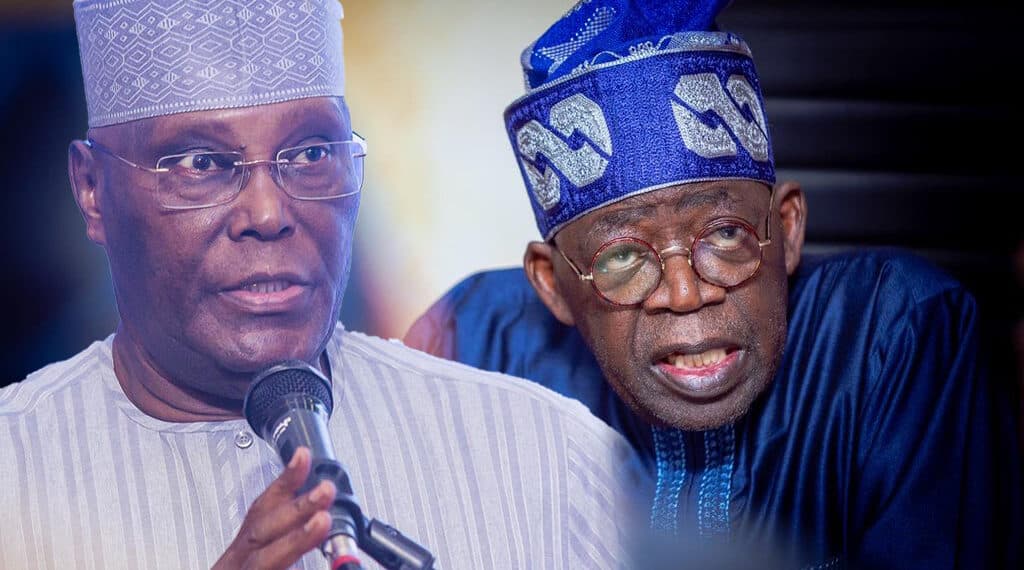
Former Vice-President Atiku Abubakar has demanded an explanation from President Bola Tinubu over the funds saved from fuel subsidy removal, questioning why Nigerians are still facing hardship as another ASUU strike threatens the nation’s universities. Atiku raised the issue in a statement released on Sunday by his Senior Special Assistant on Public Communication, Phrank Shaibu, […]
Former Vice-President Atiku Abubakar has demanded an explanation from President Bola Tinubu over the funds saved from fuel subsidy removal, questioning why Nigerians are still facing hardship as another ASUU strike threatens the nation’s universities.
Atiku raised the issue in a statement released on Sunday by his Senior Special Assistant on Public Communication, Phrank Shaibu, following ASUU’s latest warning of possible nationwide industrial action.
The former vice-president said the renewed strike threat raised fresh questions about the Federal Government’s earlier promise that savings from subsidy removal would be redirected towards sectors such as education, healthcare and infrastructure.
He specifically challenged the government to explain what had happened to the money Nigerians were told would be freed following the end of the subsidy regime.
“If the subsidy is gone and Nigerians have paid for that decision through unprecedented hardship, then President Tinubu owes the country a simple answer: where is the money?” he asked.
The controversy followed ASUU’s announcement that it could commence a nationwide strike “within the shortest time possible” if urgent action was not taken to resolve issues affecting university lecturers.
ASUU President Chris Piwuna said the decision was reached during an emergency meeting of the union’s National Executive Council held at the University of Abuja.
According to the union, the Federal and state governments had failed to fully implement the December 2025 agreement reached with ASUU.
The lecturers’ union also complained about alleged non-remittance of deductions for pension contributions, cooperative societies and check-off dues, which it said had remained unpaid for several months.
Reacting, Atiku argued that the latest development contradicted the government’s justification for ending fuel subsidy.
He said Nigerians had accepted the consequences of higher petrol prices and rising costs of transportation, food, energy and education on the understanding that the resulting savings would be invested in improving public services.
Atiku also questioned claims that subsidy savings had translated into larger allocations to state governments, asking why such increased revenues had not produced corresponding improvements in public education.
He pointed to the possibility of students being forced to remain at home because of another lecturers’ strike while governments simultaneously celebrate increased allocations.
The former vice-president also took aim at NELFUND, arguing that the government had increased the financial burden of education and then introduced student loans to help young Nigerians cope with the rising cost.
He described the situation as “government-manufactured poverty” and accused the administration of prioritising concessions and privileges for powerful interests over relief for ordinary citizens.
Atiku maintained that the renewed ASUU crisis showed that the removal of fuel subsidy had not solved the longstanding challenges affecting Nigeria’s university system or delivered the improvements in public services that Nigerians were promised.