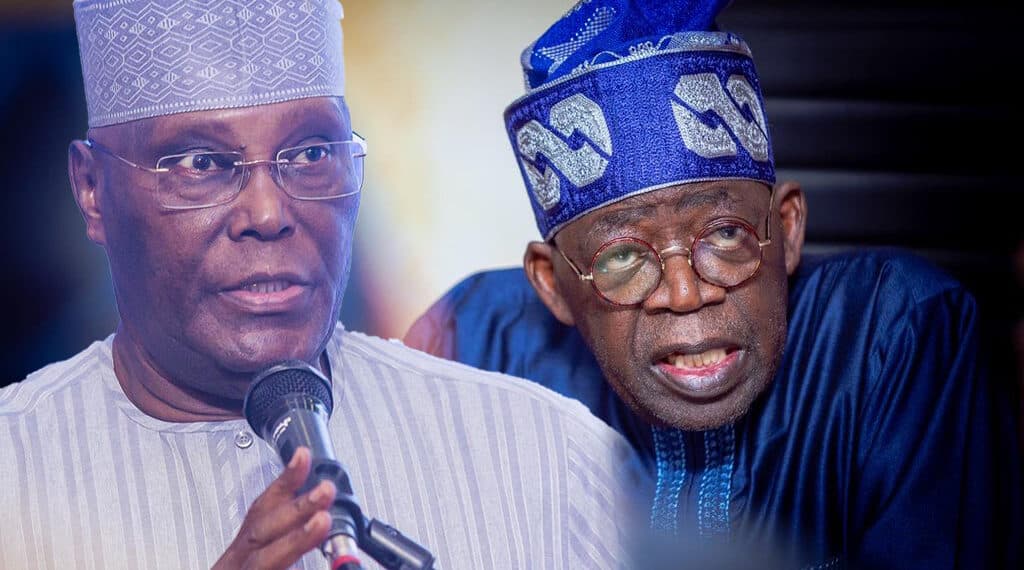
Former Vice President Atiku Abubakar has asked President Bola Tinubu to take urgent action to bring down petrol prices, warning that the cost of energy, transport and basic necessities is placing increasing pressure on Nigerians. Speaking in Abuja on Friday at a briefing focused on fuel prices, palliatives and the cost of living, Atiku said […]
Former Vice President Atiku Abubakar has asked President Bola Tinubu to take urgent action to bring down petrol prices, warning that the cost of energy, transport and basic necessities is placing increasing pressure on Nigerians.
Speaking in Abuja on Friday at a briefing focused on fuel prices, palliatives and the cost of living, Atiku said government policies must respond to the economic difficulties confronting families and businesses across the country.
The ADC presidential candidate linked the current pressure on households and businesses to the removal of the petrol subsidy in May 2023, saying the policy had affected workers, farmers, manufacturers and other Nigerians.
He explained that the consequences of higher petrol prices extend across the economy because increased fuel costs raise transportation and logistics expenses, which eventually affect the prices of food and other essential goods.
“When government makes energy expensive, it makes life expensive,” Atiku said.
Atiku recalled that he had earlier proposed government intervention to lower petrol prices but claimed that Tinubu rejected the suggestion and described it as evidence of “serious ignorance” of governance and the economy.
He said the concerns being expressed by labour unions, manufacturers, petroleum marketers and ordinary Nigerians showed that the rising cost of living required greater attention from the government.
“When workers, producers, marketers and ordinary families are all raising the alarm, government must listen,” he said.
The former vice president called for a review of policies that are increasing the cost of production and making it more difficult for families to purchase basic goods.
He also questioned the significance of rising government revenue and GDP figures when Nigerians are unable to buy the same quantity of food, fuel, electricity and transportation services with their income.
“If government receives more naira while the citizen’s naira buys less food, less fuel, less electricity and less transportation, then bigger government revenues mean little to the family struggling to survive,” Atiku said.
He urged Tinubu to consider measures that could reduce petrol prices during the remainder of his first term, stressing that the source of a policy proposal should not determine whether it is considered.
According to Atiku, he is willing to make his policy framework available to the administration and allow the government to implement it under its own name if it can provide relief for Nigerians.
“If you need the framework, I will provide it. Implement it under your government. Give it whatever name you choose. Take the credit,” he said.
“I ask for only one thing: Let Nigerians breathe.”
Atiku also took aim at the government’s use of palliatives, arguing that temporary relief cannot substitute for policies that address the causes of economic hardship.
“Palliatives manage pain. Good policy addresses the source of the pain,” he said.
He expressed similar concern over the planned removal of electricity subsidies from 2027, noting that many households and businesses already depend on expensive electricity, diesel and other alternative sources of power.
Atiku urged the government to consider the consequences of the petrol subsidy removal before proceeding with changes to electricity subsidies.
“The lesson of petrol must not be repeated with electricity,” he said.
On the 2027 presidential election, Atiku said political competition with Tinubu would not prevent him from supporting measures that improve the welfare of Nigerians.
“I am prepared to compete with you politically. But I will never compete with the welfare of the Nigerian people,” he said.
Atiku also disclosed elements of the petrol pricing policy he said he would pursue if elected president in 2027.
He proposed a transparent production subsidy for petroleum products refined locally and sold to Nigerians, while imported products would be excluded from the programme.
He said the proposal was intended to reduce production costs and make locally refined petroleum products more affordable to consumers.
According to Atiku, the scheme would operate within a fixed spending limit, require National Assembly approval and undergo independent audits.
He said the wider objective of his economic programme would be to translate economic growth into increased production, employment opportunities, stronger purchasing power and better living standards.
“Nigerians do not live on statistics. They live on what their hard-earned money can buy,” Atiku