
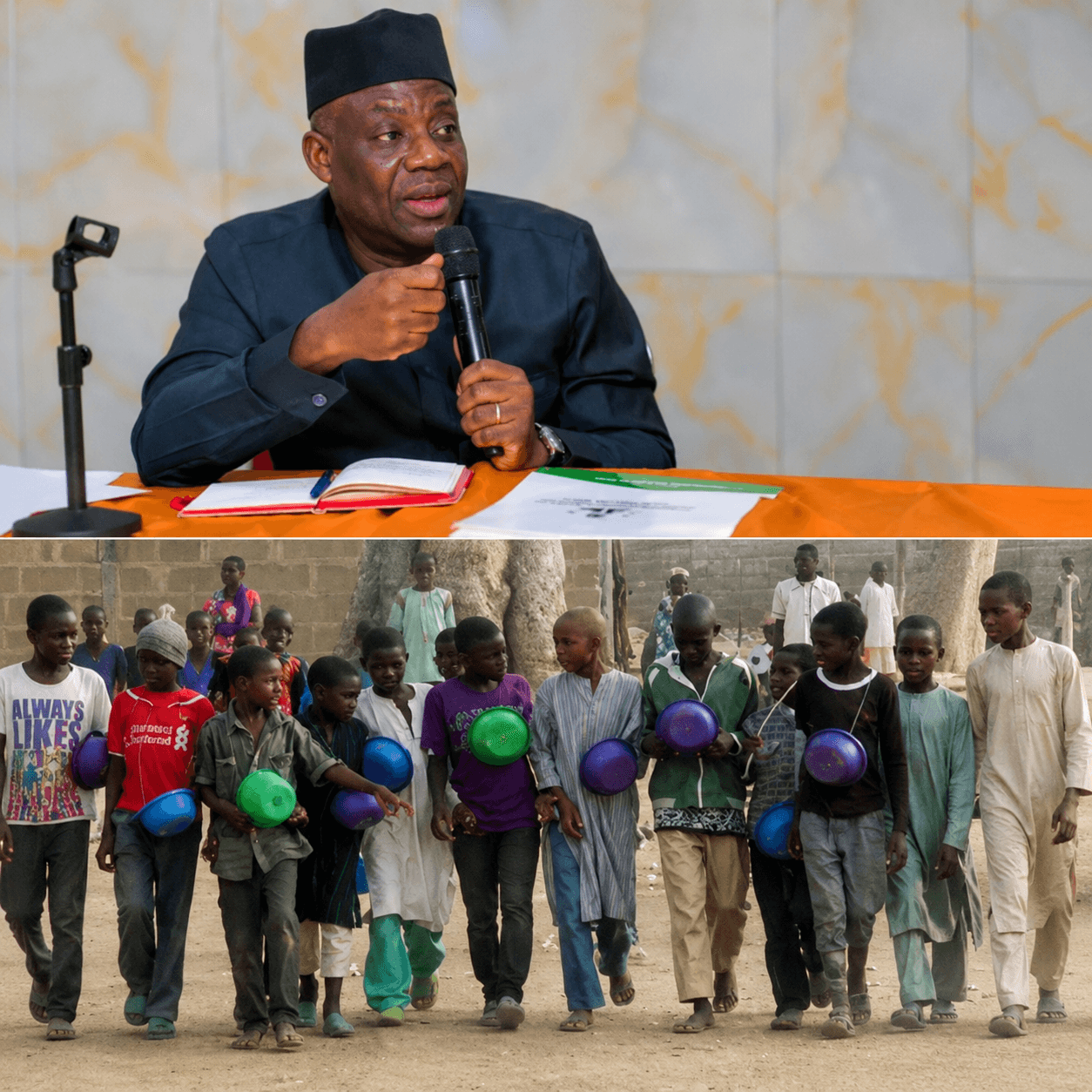
The Federal Government has rolled out a nationwide policy reforming the Almajiri education system, banning street begging, introducing compulsory basic education and vocational training, and requiring all learning centres to register with government authorities. The policy prohibits Almajiri schools from sending pupils onto the streets to beg and warns that registered learning centres that violate […]
The Federal Government has rolled out a nationwide policy reforming the Almajiri education system, banning street begging, introducing compulsory basic education and vocational training, and requiring all learning centres to register with government authorities.
The policy prohibits Almajiri schools from sending pupils onto the streets to beg and warns that registered learning centres that violate the directive could face sanctions, including suspension or closure.
To strengthen regulation, all Almajiri learning centres must register with relevant authorities while maintaining manual or electronic records, including biometric information for every learner.
The government also introduced compulsory literacy, numeracy, digital education, vocational skills, civic education and life skills into the curriculum to prepare learners for broader educational and economic opportunities.
For the first time, pupils who complete recognised Almajiri education programmes will receive nationally recognised certificates through a structured certification process supervised by the National Commission for Almajiri and Out-of-School Children Education.
The reforms also set minimum health and welfare standards for learning centres, requiring health screenings, access to nearby healthcare facilities, adequate sanitation, proper accommodation and separate facilities for male and female learners.
In addition, registered schools will qualify for government support programmes, including learning materials, nutrition services, teacher development initiatives and other educational interventions.
According to the Federal Government, the reforms are intended to modernise the Almajiri education system without altering its religious foundation, while addressing child protection concerns, reducing street begging and integrating learners into Nigeria’s broader education framework.