
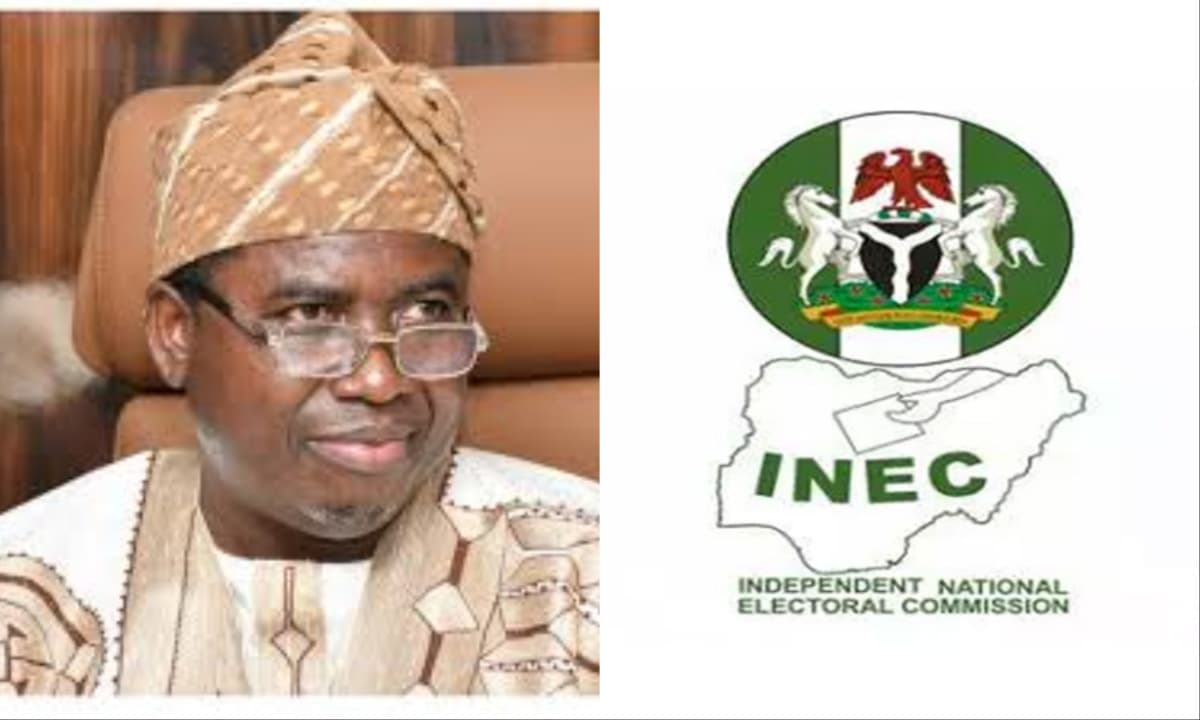
INEC Chairman Prof. Joash Amupitan has raised the alarm over a new threat to Nigeria’s 2027 election, warning that AI-generated videos, audio and images could deceive millions of voters before the false claims are detected. Amupitan raised the concern in a keynote address delivered at the 13th Annual International Conference of the Association of Communication […]
INEC Chairman Prof. Joash Amupitan has raised the alarm over a new threat to Nigeria’s 2027 election, warning that AI-generated videos, audio and images could deceive millions of voters before the false claims are detected.
Amupitan raised the concern in a keynote address delivered at the 13th Annual International Conference of the Association of Communication Scholars and Professionals of Nigeria in Abuja on Wednesday. He was represented at the event by National Commissioner Sani Adam.
The INEC chairman said advances in generative artificial intelligence had significantly lowered the cost of creating convincing fake videos, recordings and images. He noted that the technology was making manipulated material increasingly difficult for the public to distinguish from genuine political content.
He referred to documented incidents from recent elections in West and East Africa, including manipulated material that circulated during Nigeria’s 2023 presidential election. According to him, the speed at which such content travels through social media means millions of people could encounter false information before any meaningful verification takes place.
Amupitan said the challenge was not limited to fake content created from scratch. He identified algorithmic micro-targeting as an equally serious concern because it can deliver different messages to specific groups of voters, creating an environment where citizens may receive contradictory versions of political events without access to a common factual foundation.
He further linked the fight against disinformation to INEC’s broader credibility, saying Nigerians must be able to trust information about the commission’s electoral processes. He specifically highlighted the ballot, BVAS and result sheets as areas where clarity, transparency and public confidence would remain critical.
According to him, technologies such as BVAS and IReV were introduced to improve confidence in the electoral process by allowing polling-unit results to be viewed by citizens before the collation stage. However, he admitted that the experience of the 2023 elections also showed that when electoral technology does not function as expected, it can become a source of suspicion rather than reassurance.
To prevent a repeat of such concerns, Amupitan disclosed that INEC was conducting a broad review of its electoral technology systems. The exercise will cover areas such as redundancy, penetration testing and disaster recovery, while the commission is also considering a mock presidential election to test accreditation, result transmission and result viewing before the 2027 poll.
The chairman also revealed that INEC had submitted a major budget proposal covering election operations and technology, including replacement accreditation devices for equipment that was lost or damaged during the last election. While the commission is still waiting for full funding, its ICT team has reportedly started discussions with manufacturers.
Amupitan said preparations for the technology audit and possible mock election would continue alongside the budget process. He also stressed that Nigeria cannot simply copy technological approaches used in other countries without adapting them to its own realities, particularly its varying levels of internet access, linguistic diversity and institutional trust.
Rather than responding to disinformation by limiting legitimate journalism or civic criticism, the INEC chairman said the commission intends to counter false narratives by making accurate information available more quickly. He reaffirmed INEC’s commitment to stronger technology, greater transparency and improved public confidence as the country heads toward the 2027 general elections.