
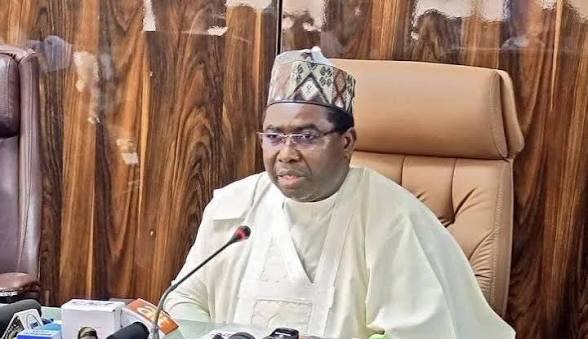
INEC Chairman Joash Amupitan says ballot papers for Saturday’s mock accreditation exercise will carry no registered party names, dismissing concerns about their use and explaining that the materials are intended solely for testing the commission’s electoral systems. Professor Joash Amupitan, disclosed this during a meeting with Resident Electoral Commissioners in Abuja on Wednesday, explaining that […]
INEC Chairman Joash Amupitan says ballot papers for Saturday’s mock accreditation exercise will carry no registered party names, dismissing concerns about their use and explaining that the materials are intended solely for testing the commission’s electoral systems.
Professor Joash Amupitan, disclosed this during a meeting with Resident Electoral Commissioners in Abuja on Wednesday, explaining that the commission would use pseudo-ballot papers for the exercise.
He said the explanation was important because questions had emerged over why the materials would not carry political party names, with some people raising concerns about the possibility of electoral manipulation ahead of the 2027 elections. Amupitan maintained that the materials would be visibly different from actual election ballot papers.
The mock exercise will be conducted in two polling units per ward nationwide. According to the chairman, the commission intends to use the exercise to assess its operational preparedness and identify weaknesses before the next general elections.
Among the systems scheduled for testing are upgraded BVAS devices, logistics procedures and the INEC Result Viewing Portal. Amupitan said particular attention would be given to the processes for verifying and transmitting election results.
He also explained that the commission had strengthened its IReV procedures to include automated checks on figures recorded on Form EC8A. The checks are designed to identify arithmetic inconsistencies and possible over-voting before results are uploaded to the portal.
The INEC chairman said the measures would help ensure that the results transmitted from polling units correspond with figures verified by those present during the process. He added that the system was expected to reduce confusion and uncertainty associated with manual collation.
Amupitan instructed Resident Electoral Commissioners to personally supervise preparations in their respective states and ensure that the mock exercise was properly monitored. National commissioners were also directed to return to their zones, while the INEC chairman said he would participate in the field assessment.
Turning to the 2027 elections, he warned that the commission could not afford delays in implementing its preparations. He said INEC was dealing with more than 100 million verified voters and would coordinate the deployment of BVAS devices and over 1.4 million temporary election personnel across the country.
He also confirmed that the distribution of sensitive and non-sensitive election materials to states had commenced. The commissioners were urged to resolve logistical difficulties, communication gaps and other operational challenges identified during previous off-cycle elections.