
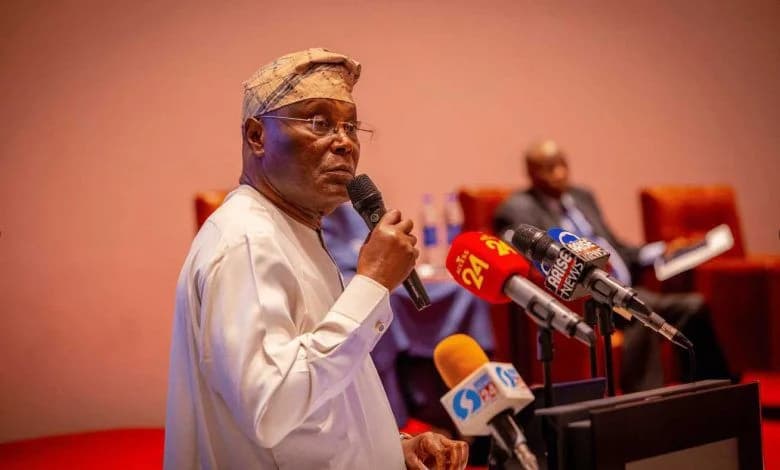
A fresh political battle over petrol subsidy has erupted ahead of the 2027 election, with the APC rejecting Atiku Abubakar’s plan to restore the subsidy and the ADC demanding an account of the N15.8tn it says government gained from economic reforms. The dispute followed Atiku’s recent pledge to reinstate the petrol subsidy if elected president, […]
A fresh political battle over petrol subsidy has erupted ahead of the 2027 election, with the APC rejecting Atiku Abubakar’s plan to restore the subsidy and the ADC demanding an account of the N15.8tn it says government gained from economic reforms.
The dispute followed Atiku’s recent pledge to reinstate the petrol subsidy if elected president, a proposal the APC says could plunge the country back into the financial difficulties associated with the old subsidy system.
APC National Chairman, Prof Nentawe Yilwatda, warned that returning to the subsidy regime could put pressure on government finances and threaten spending on workers’ wages, education, healthcare and infrastructure.
In a statement released through his Special Adviser on Media and Information Strategy, Abimbola Tooki, Yilwatda argued that the debate should not focus only on the prospect of cheaper petrol but should also consider how much government would have to spend to sustain the subsidy.
He said states had previously struggled to meet salary and pension obligations before the removal of the subsidy, while increased allocations from the Federation had subsequently strengthened their finances.
Yilwatda also warned that a renewed subsidy regime could undermine programmes supporting education and other essential public services, arguing that government revenue must be sufficient to meet its responsibilities.
The APC chairman acknowledged the hardship caused by the subsidy removal but maintained that the solution should be sustainable interventions rather than returning to a system he described as financially burdensome.
Atiku, however, has argued that Nigerians need relief from the economic pressure created by the removal of the subsidy and has promised to restore it if elected in 2027.
The subsidy was removed by President Bola Tinubu on May 29, 2023, immediately causing petrol prices to rise and triggering increases in transportation costs and the prices of goods and services.
The ADC has now shifted attention to what it says are the financial gains recorded by governments since the reform, challenging Abdulaziz Yari, Director-General of Tinubu’s 2027 re-election campaign, to explain how Nigerians have benefited.
According to the ADC, figures attributed to the Minister of Finance indicate that petrol subsidy removal and foreign exchange reforms generated approximately N15.8tn in additional resources for the Federation between June 2023 and December 2025.
The party said the Federal Government received about N5.4tn of the additional resources, with states receiving another N5.4tn and local governments approximately N3.9tn.
It further claimed that states collectively received N47.25tn through Federation Account allocations between 2023 and 2025, with annual allocations increasing significantly over the period.
Despite the increase in government revenue, the ADC argued that the financial gains had not produced a corresponding improvement in the standard of living of ordinary Nigerians.
The opposition party pointed to rising food and transportation costs and questioned why families were still struggling to meet basic needs despite the increased revenue available to governments.
The ADC also raised concerns over the cost of petrol, saying the price had risen from about N185 per litre before subsidy removal to more than N1,300 per litre in many areas by August 2025.
It criticised the pace of the government’s CNG programme, arguing that a faster and wider rollout could have provided more immediate relief to Nigerians facing high transportation costs.
The opposition party also challenged the APC to explain what alternative solution it would offer Nigerians if it remained opposed to restoring the subsidy.
It asked how the government intended to reduce petrol, food and transport costs before the 2027 election, insisting that citizens could not simply be asked to continue enduring economic hardship.
The ADC clarified that its position was not a call to revive the previous subsidy system, which it accused of corruption and a lack of transparency.
Instead, the party said it would pursue increased domestic refining and targeted support measures designed to reduce fuel prices while avoiding the alleged weaknesses of the former subsidy regime.
The competing positions have turned petrol subsidy into a major political issue ahead of the 2027 election, with the APC defending the reform and the ADC using its economic consequences as part of its criticism of the Tinubu administration.
The ADC maintained that the ultimate test of the reforms should be whether Nigerians are experiencing better living conditions, rather than simply the amount of revenue being collected by governments.
The party argued that voters would judge the government and opposition parties based on issues including food affordability, jobs, security, transportation and the overall cost of living.