As Nigeria marks its 66th Independence anniversary, the Nigeria Labour Congress (NLC) has demanded lower petrol prices, an immediate nationwide wage award and fresh negotiations for a new national minimum wage, saying inflation and rising living costs have continued to erode workers’ purchasing power. The demand was contained in an Independence Day statement signed by […]
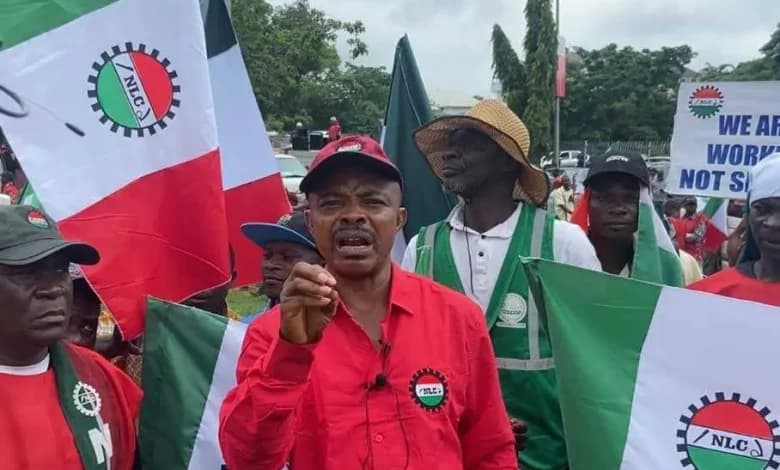
As Nigeria marks its 66th Independence anniversary, the Nigeria Labour Congress (NLC) has demanded lower petrol prices, an immediate nationwide wage award and fresh negotiations for a new national minimum wage, saying inflation and rising living costs have continued to erode workers’ purchasing power.
The demand was contained in an Independence Day statement signed by NLC President Joe Ajaero on Wednesday and titled, “Our Hope Depends on the Choices We Make and the Actions We Take.”
The labour union said workers and households were facing increasing pressure from the rising cost of transportation, food, rent, education and other necessities.
It specifically blamed the sharp increase in petrol prices following the removal of the subsidy in 2023 for worsening the cost-of-living crisis.
The NLC said petrol now sells for about ₦1,430 per litre or higher in major cities, with prices reportedly even higher in remote areas.
According to the union, the increase in petrol prices has created a ripple effect across the economy, driving up transportation costs and subsequently increasing the prices of food, school fees, rent and other essential goods and services.
It called on the Federal Government to urgently address the impact of fuel prices on transportation and other sectors, arguing that attempts to reduce hardship would remain ineffective without addressing the transmission of fuel costs throughout the economy.
The NLC also demanded an immediate wage award for workers employed by the federal, state and local governments, stressing that such an intervention should be viewed as an emergency measure rather than charity.
The demand follows the October 2023 agreement reached between the Federal Government and organised labour after the removal of the petrol subsidy, which included a ₦35,000 monthly wage award for federal workers and proposed similar relief for workers at the state and local government levels.
The labour congress further accused the government of not fully implementing tax relief measures contained in its October 2023 agreement with labour.
It also demanded urgent negotiations for a new national minimum wage, arguing that the existing ₦70,000 wage had already lost substantial purchasing power because of inflation.
The NLC called for the immediate establishment of a tripartite committee to formulate and legislate a new minimum wage framework for 2027 before the end of 2026.
The current ₦70,000 national minimum wage was approved by President Bola Ahmed Tinubu in July 2024, with the President stating that it would be reviewed after three years.
The union also called for a reduction in the cost of governance and greater transparency in government spending, while demanding increased investment in roads, hospitals, schools and other public infrastructure.
It questioned the government’s handling of the savings expected from the removal of the petrol subsidy, noting that the policy had been presented as a measure that would free resources for infrastructure and social services.
The NLC also criticised Nigeria’s reliance on imported refined petroleum products and called for stronger investment in domestic refining capacity, despite the country’s status as a major oil producer.
On social services, the union demanded affordable public education, functional healthcare and better roads, arguing that such investments would ease the financial pressure on households and support economic productivity.
The labour body also expressed concern over youth unemployment and migration, urging the government to create genuine economic opportunities that would encourage young Nigerians to build their future in the country.
It further linked insecurity to the country’s economic difficulties, saying violence has disrupted farming, education and healthcare while worsening the challenges of poverty, unemployment and inequality.
On the 2027 elections, the NLC said workers should retain the freedom to make independent political choices and warned against electoral manipulation, intimidation and statements capable of inflaming ethnic or religious tensions.
Ajaero said the NLC would eventually use its proposed Workers’ Charter to state its position on policies and candidates, but maintained that workers’ organisations should not be reduced to instruments for electoral mobilisation.
The union said it would continue to focus on decent wages, safe workplaces, accountability and workers’ welfare as it called for collective action to address Nigeria’s economic challenges.