President Bola Ahmed Tinubu has said Nigeria has moved beyond the most difficult stage of his economic reforms, declaring that the country is now entering an era of prosperity while cautioning Nigerians against attempts to reverse the petrol subsidy removal ahead of the 2027 elections. The President made the statement on Thursday during his nationwide […]
President Bola Ahmed Tinubu has said Nigeria has moved beyond the most difficult stage of his economic reforms, declaring that the country is now entering an era of prosperity while cautioning Nigerians against attempts to reverse the petrol subsidy removal ahead of the 2027 elections.
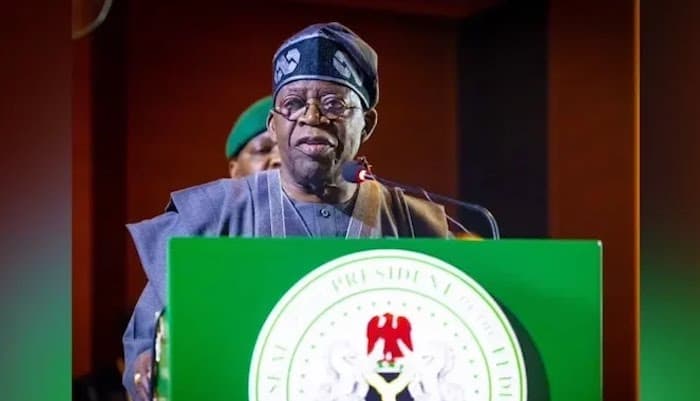
The President made the statement on Thursday during his nationwide broadcast marking Nigeria’s 66th Independence anniversary, delivering an address titled, “From Reform to Prosperity.”
Tinubu defended the removal of the petrol subsidy and the unification of the naira exchange rate, arguing that the policies were necessary to confront structural weaknesses that had been allowed to persist under previous administrations.
He compared Nigeria’s economic situation to that of a cancer patient who must choose between enduring painful treatment or relying on medication that only masks the symptoms.
According to the President, previous governments had chosen temporary relief instead of confronting the fundamental problems affecting the economy.
Tinubu said his administration’s reforms should therefore not be blamed for the country’s economic difficulties, arguing that the policies had instead exposed and addressed weaknesses that had existed for years.
The President also took aim at calls to restore petrol subsidies, urging Nigerians to reject what he described as a “siren song” from those seeking to reverse the policy.
His warning comes as the subsidy question increasingly features in political debates ahead of the 2027 general elections, with opposition politicians putting forward different proposals on how to address fuel prices and the cost of living.
Tinubu said the reforms were already producing results, claiming that Nigeria’s economy recorded growth of more than four per cent in 2026, with contributions from both the oil and non-oil sectors.
He also listed reduced oil theft, lower inflation from its previous peak, rebuilt foreign reserves and greater stability in the foreign exchange market among the developments he attributed to the reforms.
The President further said Nigeria recorded more than $6 billion in non-oil export revenue in 2025, which he described as the country’s highest-ever figure.
He argued that the figures demonstrated increased activity by Nigerian businesses and said foreign direct investment was also continuing to rise.
Tinubu declared that the country had reached a turning point, saying the government’s central economic task had shifted from correcting the nation’s direction to creating “shared and widespread prosperity.”
He said prosperity should ultimately be reflected in the daily lives of Nigerians rather than only in macroeconomic statistics.
According to him, the government wants farmers to produce more and earn better incomes, factories to have dependable electricity, businesses to access credit and young Nigerians to secure productive employment.
On the cost of living, Tinubu said the government would focus on lowering production and transportation costs through agricultural mechanisation, improved irrigation, access to seeds and fertiliser, better storage facilities and stronger transportation infrastructure.
He also listed roads, railways and ports among the areas targeted for investment to improve the movement of goods from farms and factories to consumers.
The President said his administration would place jobs, enterprise and industrial expansion at the centre of its next phase, while promising to use domestic gas to support industries and revive manufacturing centres.
He also pledged greater digital connectivity and skills development to enable more young Nigerians to participate in the economy.
On poverty, Tinubu acknowledged the hardship facing millions of Nigerians and said the government was strengthening programmes aimed at providing direct assistance to vulnerable households.
He highlighted NELFUND and CREDICORP as examples of programmes designed to expand access to education and consumer credit for Nigerians.
Tinubu also maintained that salaries and pensions had been paid “on time and in full” since 2023, while saying pension reforms were being implemented to improve support for retirees.
He stressed that social welfare programmes were not intended to replace economic prosperity but to provide support to vulnerable Nigerians while broader economic reforms take effect.
Concluding his Independence Day message, Tinubu compared Nigeria’s economic journey to the biblical crossing of the Red Sea, urging Nigerians to remain focused on the future rather than return to policies he said had failed to address the country’s underlying economic challenges.