
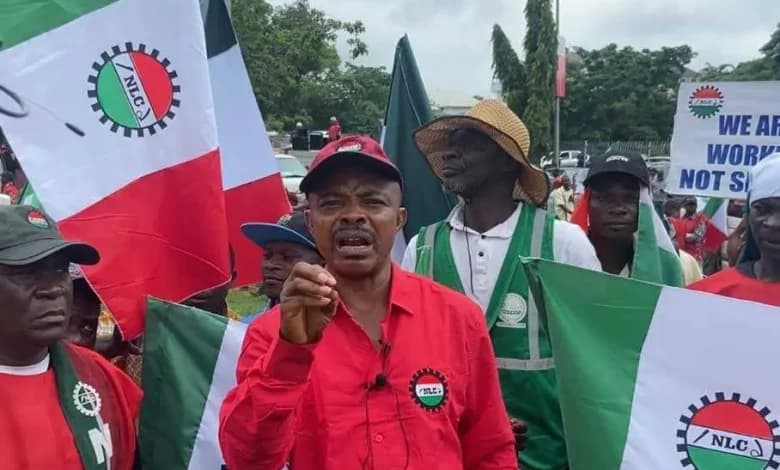
The Nigeria Labour Congress (NLC) has demanded immediate preparations for a new national minimum wage review, rejecting the Federal Government’s position that negotiations should wait until 2027. NLC President Joe Ajaero made the demand in a letter to Labour Minister Dr Muhammad Dingyadi, insisting that talks should begin in October 2026, ahead of the expiration […]
The Nigeria Labour Congress (NLC) has demanded immediate preparations for a new national minimum wage review, rejecting the Federal Government’s position that negotiations should wait until 2027.
NLC President Joe Ajaero made the demand in a letter to Labour Minister Dr Muhammad Dingyadi, insisting that talks should begin in October 2026, ahead of the expiration of the current ₦70,000 minimum wage arrangement.
“The government is not being asked to implement a new wage today, but to commence the process of negotiation,” Ajaero said, arguing that the government was treating the start of negotiations as though it meant the immediate introduction of a new wage.
The minister had stated in a letter dated October 12 that the current minimum wage, signed into law by President Bola Tinubu on July 29, 2024, was due for review on June 1, 2027. Dingyadi argued that beginning another review barely two years into implementation would be premature and potentially disruptive to industrial relations.
The NLC disagreed, citing the National Minimum Wage Act signed on April 18, 2019, and arguing that negotiations should start at least six months before the existing wage arrangement expires. It called for stakeholder nominations, the inauguration of the National Minimum Wage Tripartite Committee and the setting of a negotiation agenda to begin without delay.
The union also demanded payment of outstanding wage awards, implementation of tax relief measures agreed upon in 2023 and a reduction in petrol prices to their July 2024 level, when the current minimum wage was signed into law.
Rejecting the government’s reliance on the increase from ₦30,000 to ₦70,000 and other interventions as sufficient support, the congress said inflation, naira depreciation and higher fuel costs had reduced workers’ purchasing power.
“A wage increase that is immediately swallowed by hyperinflation is not a wage increase; it is a statistical illusion,” the NLC stated, describing the pressure on workers struggling with food, transport, housing, healthcare and education expenses.
The congress also questioned the impact of the Presidential Compressed Natural Gas initiative, citing inadequate infrastructure and shortages of gas and conversion kits. It insisted that workers needed immediate relief instead of being left to bear the burden of economic reforms.
The NLC further called for the implementation of the agreement reached with the Joint Health Sector Unions (JOHESU) and the resolution of outstanding demands by the Joint Public Sector Negotiating Council (JPSNC). It said the government’s willingness to engage would mean little without clear deadlines and concrete action.