
President Bola Tinubu has defended the foreign exchange policies introduced by his administration, claiming the naira could have become worthless if the government had not taken steps to unify the country’s multiple exchange rates. He made the statement on Friday at the All Progressives Congress presidential campaign rally in Akwa Ibom State, where he addressed […]
President Bola Tinubu has defended the foreign exchange policies introduced by his administration, claiming the naira could have become worthless if the government had not taken steps to unify the country’s multiple exchange rates.
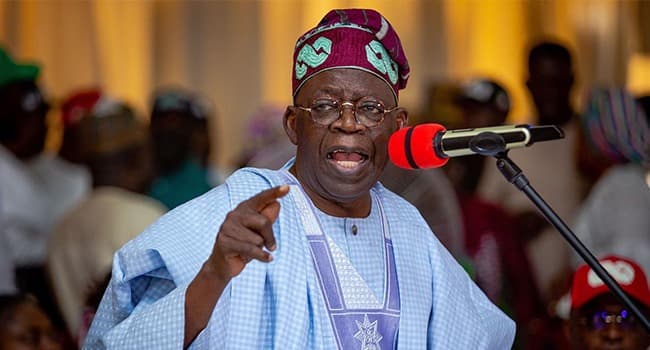
He made the statement on Friday at the All Progressives Congress presidential campaign rally in Akwa Ibom State, where he addressed criticism over the performance of the national currency against the United States dollar.
The President argued that the naira’s current exchange rate of about ₦1,300 to a dollar should be viewed against what he described as a potentially worse situation if the previous foreign exchange system had remained in place.
Tinubu illustrated his argument with a comparison involving wheelbarrows, suggesting that Nigerians might have needed them to transport the currency if his government had not introduced the reforms.
He said the decision was taken immediately after he assumed office and maintained that it helped prevent the naira from becoming completely valueless.
The President also described the currency as still having “pocketable value” despite its depreciation, insisting that the foreign exchange policy was necessary to address the weaknesses in the previous system.
Tinubu’s administration unified the country’s multiple exchange rates in June 2023 as part of efforts to reform the foreign exchange market and narrow the difference between the official and parallel market rates.
However, the naira subsequently depreciated significantly, moving from approximately ₦750 per dollar to around ₦1,900 before recovering to about ₦1,300, according to the figures presented by Tinubu.
The President’s remarks have brought renewed attention to the economic consequences of the foreign exchange reforms, particularly the currency’s movement since 2023 and the wider concerns surrounding the purchasing power of Nigerians.