
The Presidency has clarified that the US court proceedings involving President Bola Tinubu do not amount to a criminal case, describing the matter instead as a civil dispute over access to government records. The clarification was issued Thursday by Bayo Onanuga, Special Adviser to the President on Information and Strategy, following renewed public attention to […]
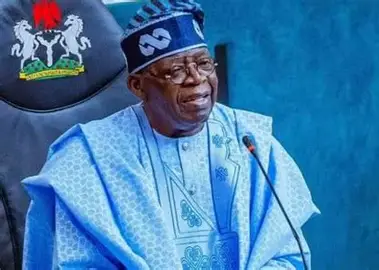
The Presidency has clarified that the US court proceedings involving President Bola Tinubu do not amount to a criminal case, describing the matter instead as a civil dispute over access to government records.
The clarification was issued Thursday by Bayo Onanuga, Special Adviser to the President on Information and Strategy, following renewed public attention to the proceedings at the United States District Court for the District of Columbia.
Onanuga maintained that Tinubu has not been criminally charged or put on trial in the matter and that the court has not made any finding that the President committed a criminal offence.
The case dates back to 2022, when Aaron Greenspan submitted requests to several US government agencies seeking records connected to Tinubu. Some agencies withheld documents or declined to confirm or deny whether certain records existed.
Greenspan later commenced Civil Action No. 23-1816 in 2023 at the US District Court for the District of Columbia. Tinubu was subsequently permitted to participate in the proceedings as an intervenor.
In defending its position, the Presidency referred to a February 4, 2003 letter from the American Consulate in Lagos to former Inspector General of Police Tafa Balogun. It said the letter indicated that an FBI records search found no criminal arrest records or warrants for Tinubu, who was then governor.
The Presidency also explained the “Glomar defence” used by the US government agencies in the case, saying it is a legal mechanism that can allow an agency to refuse to confirm or deny the existence of certain investigative records.
According to the statement, such a position can be used to protect law-enforcement personnel, confidential sources and investigative techniques from disclosure.
The Presidency said the court had already granted summary judgment in favour of several agencies, including the CIA, EOUSA, Department of State, Department of the Treasury and Internal Revenue Service.
The FBI and DEA, however, remain involved in aspects of the dispute. The Presidency said the two agencies have released 399 pages of records following court orders, but parts of the documents were withheld or redacted based on exemptions allowed under US law.
Greenspan has challenged those redactions and is seeking the release of the unredacted material. The FBI and DEA, through the US Department of Justice, have opposed the request and cited several legal protections for the withheld information.
Among the exemptions are protections for grand jury proceedings, certain investigative records, attorney-client communications, law-enforcement materials, personal privacy and information that could expose confidential sources or investigative methods.
The Presidency said Tinubu had also asserted his rights under a provision protecting personal privacy in certain law-enforcement records, following advice from his legal team.
The dispute remains before Judge Beryl A. Howell, who will ultimately determine whether the redactions made by the FBI and DEA comply with US law.
The Presidency said Greenspan has until September 11, 2026, to file his opposition and response to processes submitted by the defendants and Tinubu, while the FBI, DEA and the President have until September 18 to respond to any new filings.
It reiterated that the existence of withheld or released government records does not automatically amount to proof of criminal wrongdoing, stressing that the court is primarily being asked to determine whether the disputed redactions are legally justified.
The Presidency also rejected recent comments by Karl von Batten, saying he and his client are not parties to the case. It urged the public and Nigerian media to focus on the actual court proceedings rather than political interpretations of the dispute.